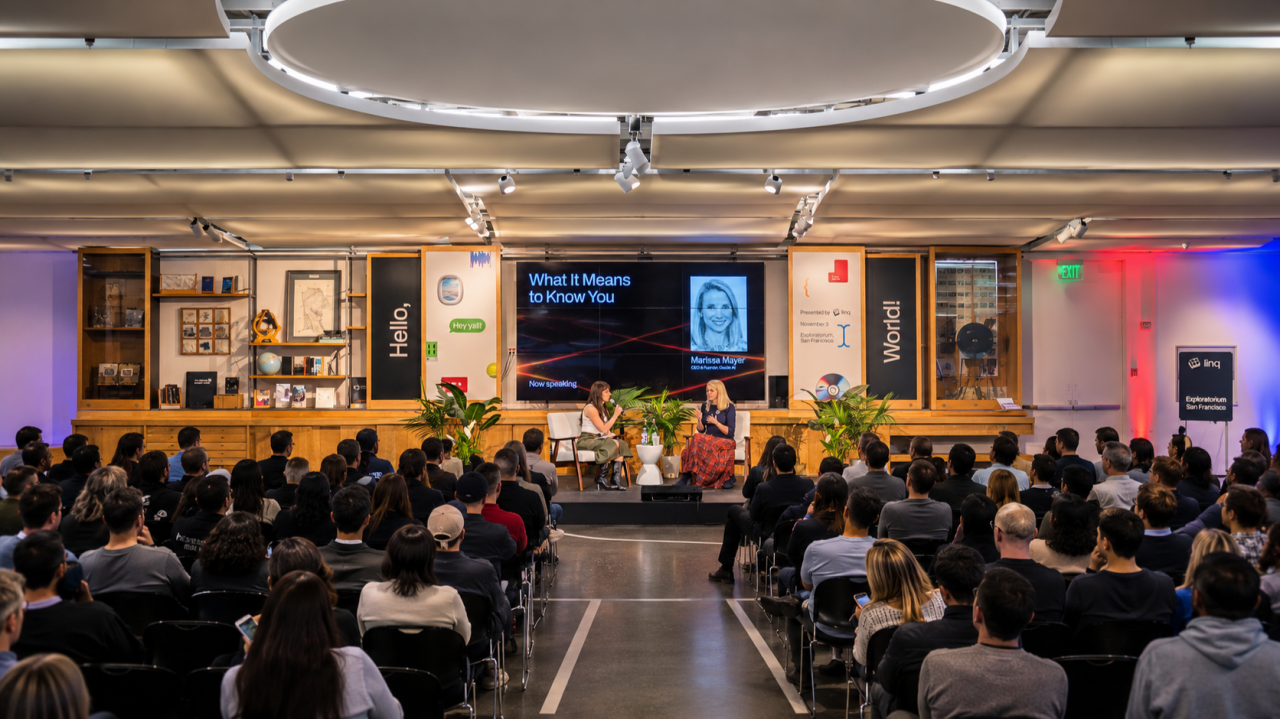
Field notes from Linq’s Hello, World! at the Exploratorium, San Francisco
The fog had mostly lifted above the SF Bay Monday as Linq gathered builders at the Exploratorium to talk about agentic products. The billing promised founders, engineers and investors “at the frontier.” The room told a subtler and perhaps more useful story: purchases are slipping out of the storefront and weaving themselves into agentic threads. Nearly every speaker described a different strand of the fabric that makes that possible.
Stripe walked thru tokens and disputes. DoorDash showed carts built from a sentence. Marissa Mayer described a camera roll that already knows which milk is on the counter. Browserbase talked about agents needing their own identities. Read together, the sessions sketch a commerce stack being rebuilt around one assumption: the buyer just may not be a person clicking on a button. It may be software holding a person’s card and a person’s taste.
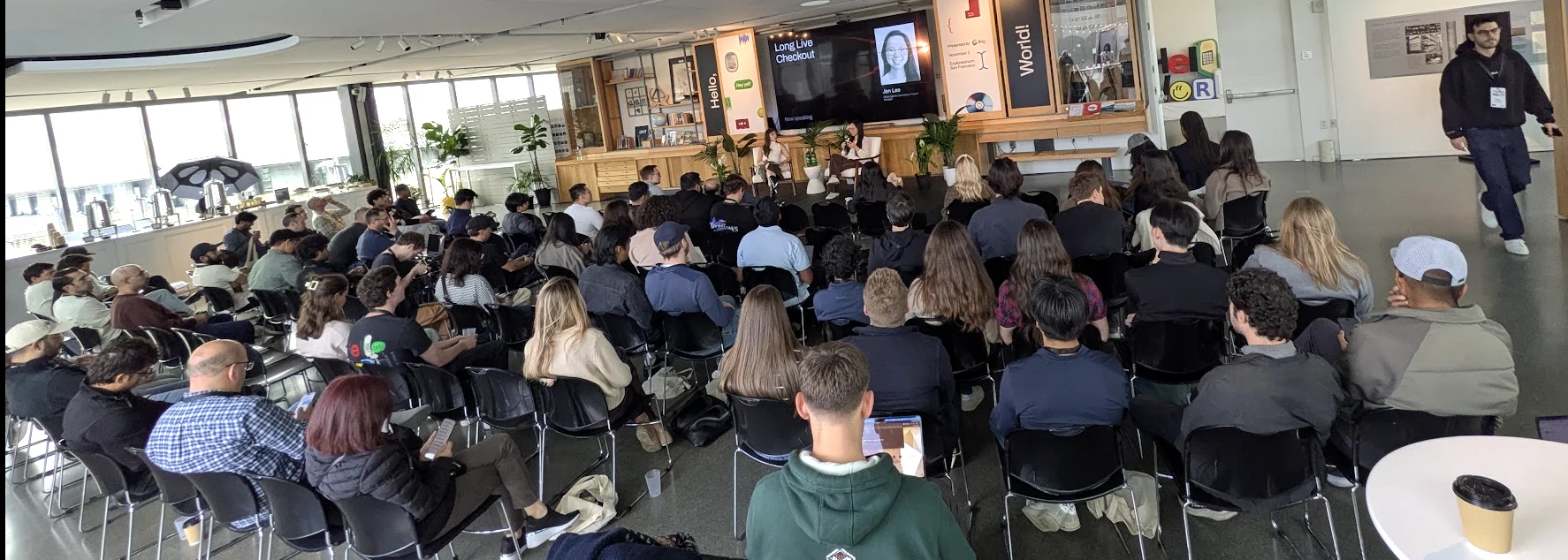
Trend 1: The buyer is now a delegate
Jennifer Lee a product manager on Stripe’s agentic commerce team, opened with the data that matters most to those selling online. Among agent-initiated purchases running through Link, retail leads at roughly 36 percent, travel and hospitality follow at about 28 percent, and music and entertainment come third. Her own example was buying Harry Styles tickets through Muse, an agent that found a promo code on Instagram before she checked out.
Another interesting observation was about what agents are not buying yet. Nearly all of the volume today is things humans consume. Lee posited the bigger opening is agents buying tools for themselves: a better data source, a specialized model, even another agent’s answer. Her analogy was “phone a friend” from Who Wants to Be a Millionaire. An agent stuck on a narrow task pays a specialist agent for one quick answer and keeps moving, instead of handing the human a to-do list and a good ole signup form. The friend, in this case, invoices.
That’s a pricing model, not just a feature. Pay-per-call, high-frequency, near-zero-cost transactions are a poor fit for card rails designed around humans buying a few things a day. Stripe’s machine payments work is aimed squarely at that gap, and it seems likely to be where the next round of business models gets invented.
Link’s head start is real. Lee noted it had around 350 million users before agentic commerce arrived, and saved credentials on a familiar surface lower the trust barrier for a consumer letting software spend money. A moat that predates the agent wave tends to be the one that survives it.
Trend 2: Agent-ready is the new mobile-ready
“Programmatic buying is always more successful,” Jen Lee said, and merchants may not love what follows from that. Sites that render everything in JavaScript, bury inventory behind odd UI elements, or lack a clean machine-readable description of what they sell will lose agent-driven orders, and the failure will look like the agent’s fault. She pointed to WebMCP as a way for browser-based agents to fill forms through a declared interface instead of guessing at the DOM.
Her most candid admission: even when merchants build a purpose-built “fast lane” for agents, agents frequently ignore it and fall back to a browser session. Stripe’s next six months include steering agents toward those lanes and signing direct integrations, such as the one with OpenTable that handles holds, deposits and card rules without the agent stalling.
This has a familiar goovy kind of a shape. About a decade ago one may have asked whether a store worked on a phone. Now the question is whether a store works for a delegate like an agent. The opportunity Lee named outright is a services layer: forward-deployed engineers helping retailers become agent-ready, from browser flows to fully programmatic purchase paths. Better still if the platform a shop already runs on makes it agent-legible by default, no engineer required. The winning move for commerce infra looks less like a new channel and more like an upgrade to the catalog, checkout and policy data every shop already has.
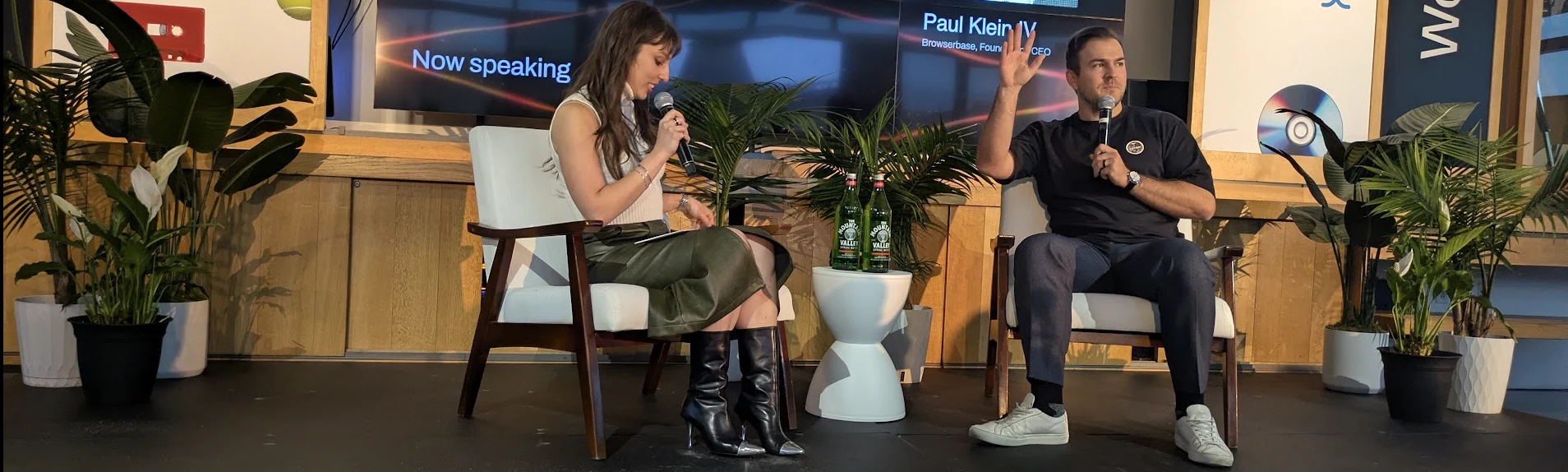
Paul Klein IV of Browserbase offered an interesting perspective. Models are improving faster than the web is being rebuilt, and he expects agents to keep using the human web much as self-driving cars use existing roads.
“It’s going to be a really long time before the DMV has an MCP server”
His practical advice to merchants: run evals that confirm an agent can complete every critical flow on the site. Lee and Klein seem less at odds than they sound. Build the fast lane, but keep the road open for agents that ignore it.

Trend 3: Trust is the actual bottleneck
Intelligence is not what slowed agentic commerce down in any session. Trust was.
On fraud, Lee was direct that Stripe Radar remains the answer, retuned because fraud models were historically trained on human behavior. The more novel piece could be evidence. Payment tokens issued to agents carry a record of what the agent did and when, which can feed the dispute packets merchants submit when a chargeback lands. That tells the parties where things went wrong. It does not yet decide who pays.
Lee was pretty candid that who pays for a bad agent purchase still runs through existing systems, and she sees room for
“some sort of insurance type model.” (Tokens at least settle what happened) “At the very least, these tokens are really good paper trails.”
Who pays is still open, and that may be the gap that matters most, since people seem unlikely to hand over spending they cannot undo.
Klein attacked trust from the identity side. Today, sites block entire agent platforms with a hammer 🔨. His view is that every agent, down to an individual person’s agent, should carry its own identity, so a merchant can ban the one scalping movie tickets w/o banning the platform. Browserbase is working with Cloudflare on verification and with 1Password on agentic sign-in. He also mentioned Live View, built in early 2024 because early customers simply would not let an agent log in to anything unless they could watch it. Visibility remains a shortcut to trust - it seems.
The stack all of this implies is already open source. The Bell Stack https://github.com/browserbase/bell-stack, launched by Browserbase with Linq, pairs Browserbase for the browser, agent framework Eve by Vercel, Linq for an iMessage number and Stripe Link for the card. A browser, a messaging identity and a payment credential, assembled into a personal agent.
Trend 4: Context is where the margin hides
The moderator raised the question that could keep merchants up at night. Bargains used to go to the people willing to tolerate friction. If every buyer has an agent hunting for the best price, what happens to margins?
“I would actually argue that brand is even more important, and the ones that are able to build a really strong brand are protected from the idea that an agent can view every single brand as the same.”
Humans still absorb the marketing and still set the taste their agents act on. That holds for apparel, travel and anything identity-driven. It is weaker for commodities, where an agent comparing spec sheets has little reason to care about a logo. The likely outcome is a split: taste categories keep pricing power, and commodity categories compress.
What decides which side a merchant lands on may be context, and two speakers showed how much of it already exists.

@thelinqapp
Aryan Shah, head of AI research at DoorDash, arrived thru the acquisition of the applied AI company he previously ran. DoorDash had been a customer first. The first joint product was the in-app assistant, and the standout use case was not restaurants but groceries and retail: describe a recipe, get a cart, skip the five-minute search. Cart build time dropped and order volume rose. DoorDash’s stated ambition is an “autonomous commerce platform” across consumers, merchants and Dashers, reachable through text, phone or the app, and Shah expects the brand to drift from food delivery toward the Amazon and Walmart tier. He also described a habit more teams should copy: start every AI project with an eval, because writing one forces a full taxonomy of the problem. His team expects to rebuild consumer-facing agents roughly every two months.
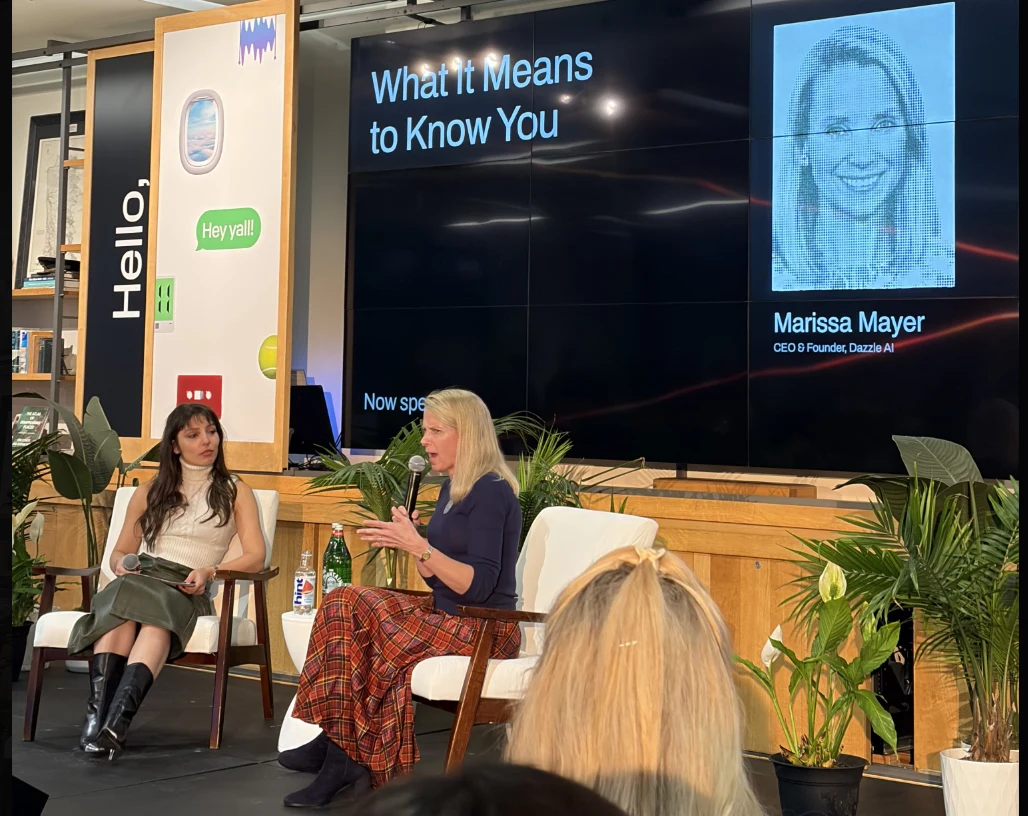
Marissa Mayer, founder and CEO of dazzle ai and formerly CEO of Yahoo, Google’s 20th employee (and the company’s first female engineer), came at context from the camera roll. Her team found that after deduplication roughly 60 percent of a typical camera roll is memories, and the other 40 percent is unfinished business: screenshots, things to buy, things to fix, places to go. Dazzle turns that into a to-do list that does itself, delivered over messaging through Linq. The commerce signal in the background of ordinary photos is pretty amazing: shoe brands, appliance brands, the milk on the counter, a mother’s height relative to her friends when choosing ski length. Photos show the cleats. Email shows the size.
“If you have an email, then you also know that I bought size five and a half last fall,” Mayer said. “So, that’s the Holy Grail.”
Her trust posture was just as notable. Sensitive images are filtered on the device and on the server and then deleted, because, as she put it, Dazzle does not need them to do a great job. For any commerce agent working with personal context, collecting less is likely to become a selling point.
A counterpoint from the operator’s chair
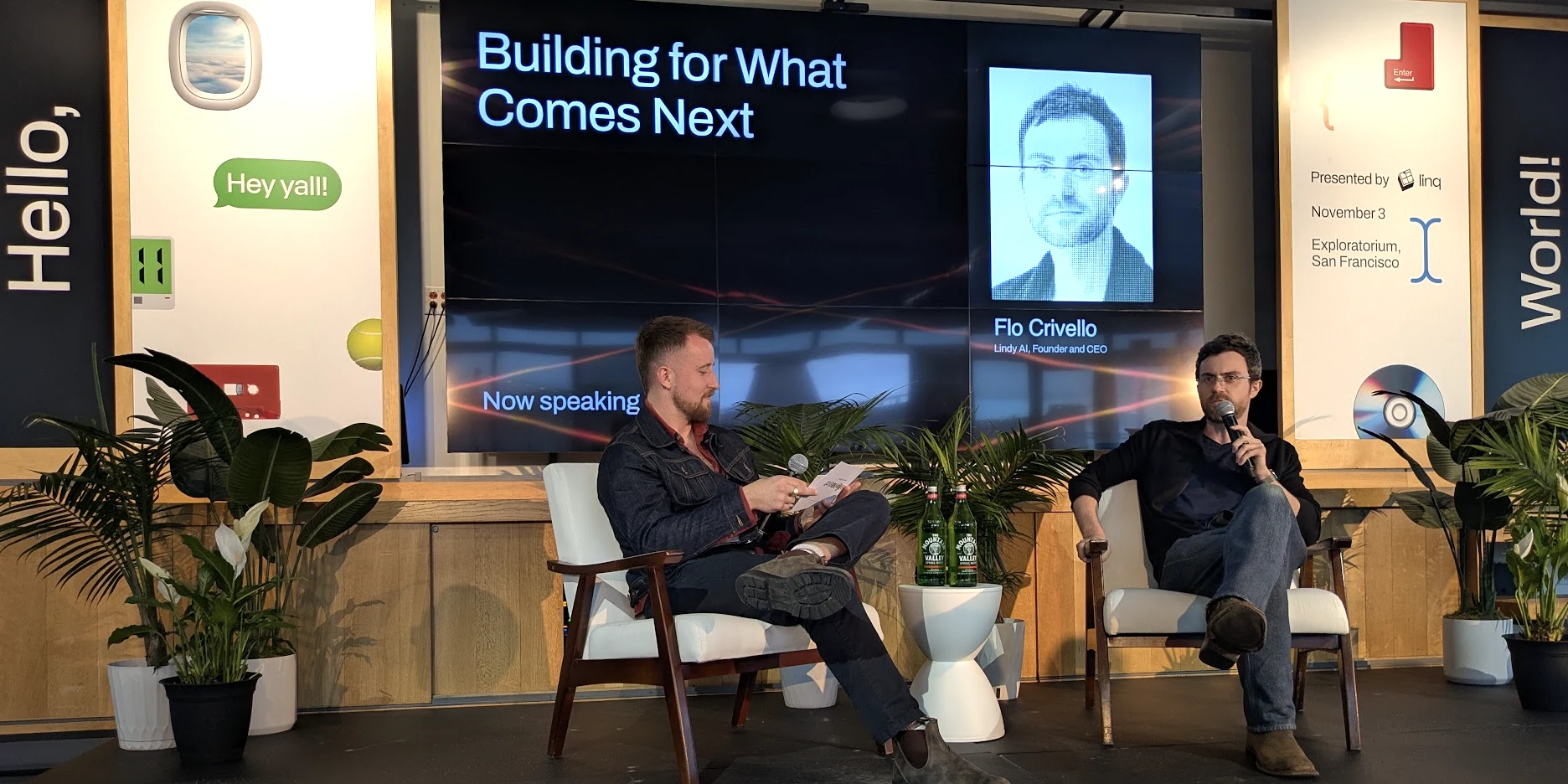
Flo Crivello of Lindy brought a different kind of energy. Host Charlie Coppinger framed Lindy through a Shopify memory: Tobias Lütke’s internal podcast, Context, built when the company got too big for him to know everyone. It kept even someone in support in New Zealand informed about what was happening and why. Capturing context, then letting the hive mind act on it, is the natural progression, Coppinger said, and Lindy is a next-generation version. Shopify days compared that feeling to discovering Lindy.
Crivello described Lindy as a single AI agent that plugs into every integration and
“hoovers up all of your company context, passively in the background.”
He asserted that companies should stop hiring engineers and aim for a “self-driving company” within about six months, with humans as the decision layer. The claim is deliberately provocative, and the timeline reads aggressive. His more grounded points landed: context is now the scarcest input for agents, open models are cheaply replacing frontier models for narrow tasks like PR review, and prompt optimization should be rerun on every model switch. For commerce teams the takeaway is less about headcount and more about operating cadence. The companies building agents for buyers will need to rebuild those agents almost as often as DoorDash does.

What to watch
- Who eats the chargeback. Token-level evidence is here. A liability model built for agents is not.
- Fast lanes that agents actually use. Building the programmatic path is half the job. Getting agents routed onto it is the other half.
- Agent-legible catalogs by default. Readiness should not depend on each merchant hiring a forward-deployed engineer.
- Per-agent identity. Blocking platforms is a stopgap. Precision is the end state.
- Agents as buyers of tools. Pay-per-call between agents could quietly become one of the largest categories, and one that seems barely measured today.
Linq’s own pitch framed the afternoon well: five billion people already know how to send a text. If the checkout is moving into that thread, the work ahead is less about the conversation and more about everything behind it that has to be ready when the agent says “buy.”
bsky.app/profile/schwentker.sandboxlabs.ai/post/3mzosg4xq4c2x
twitter.com/schwentker/status/2118886167144010151