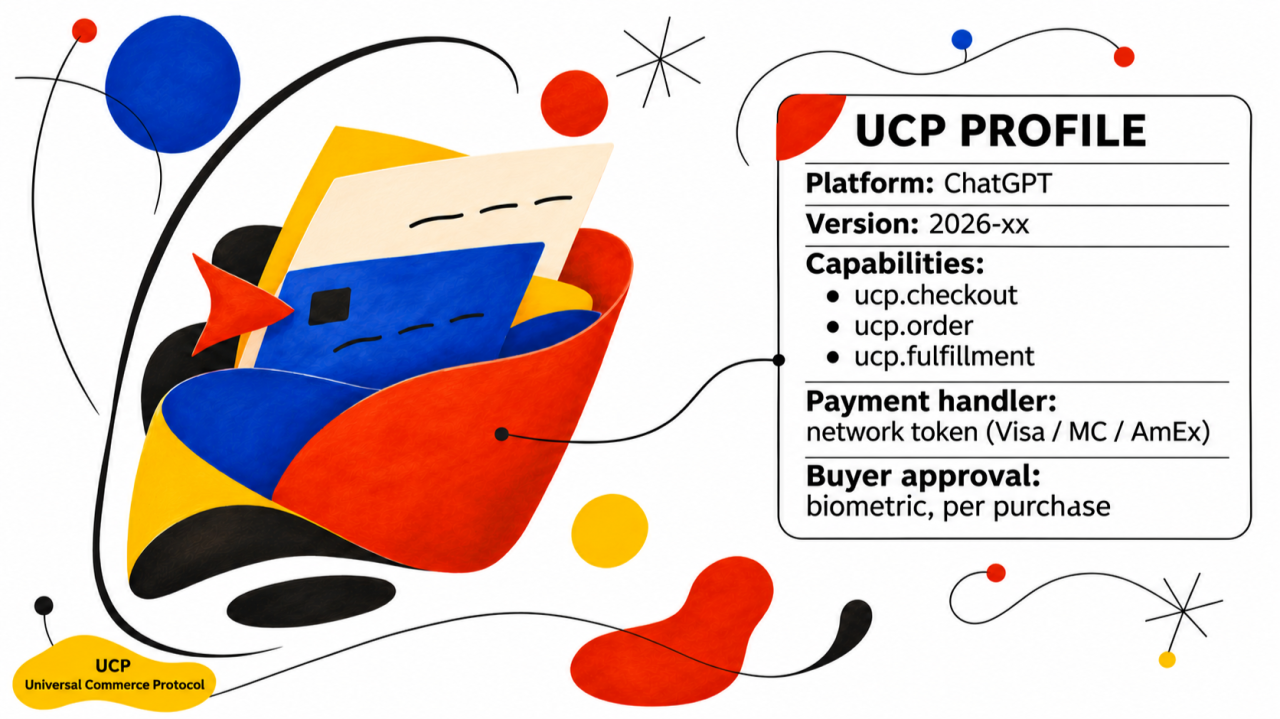
ChatGPT Wallet started rolling out to U.S. Pro subscribers with eligible U.S.-issued cards on November 13. For many of us in fintech, the arrival of an OpenAI wallet was a question of when, rather than if.
The next question is whether OpenAI can win users’ trust, and a place in their purchasing journeys. Visa’s new Trust Index shows the gaping gap: only 23% of U.S. consumers trust GenAI to handle payments for them, yet 61% say they would trust Visa to do it.
For now, Wallet is available thru ChatGPT’s agents, which can use it to complete purchases on a user’s behalf. Whether OpenAI will eventually make Wallet available programmatically to agents outside ChatGPT remains an open question. And critical. (details discussed in a future Part 2)
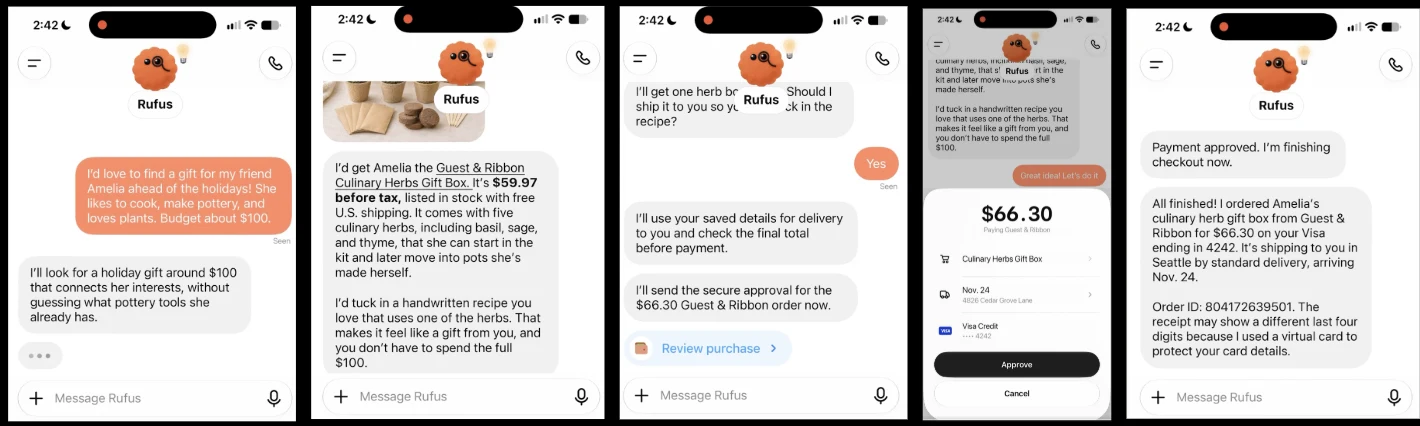
How does it work once you’ve setup your wallet with a couple of credit cards? Imagine you’ve ask your GPT agent to finds a holiday gift for your friend. It finds something you think they’ll love. You review the purchase and approves it with Face ID or another biometric. The credit card network issues a token tied to the card selected. The merchant charges that card without ever seeing the number. Rewards and dispute protections stay on the account the you chose.
Now what about merchants?
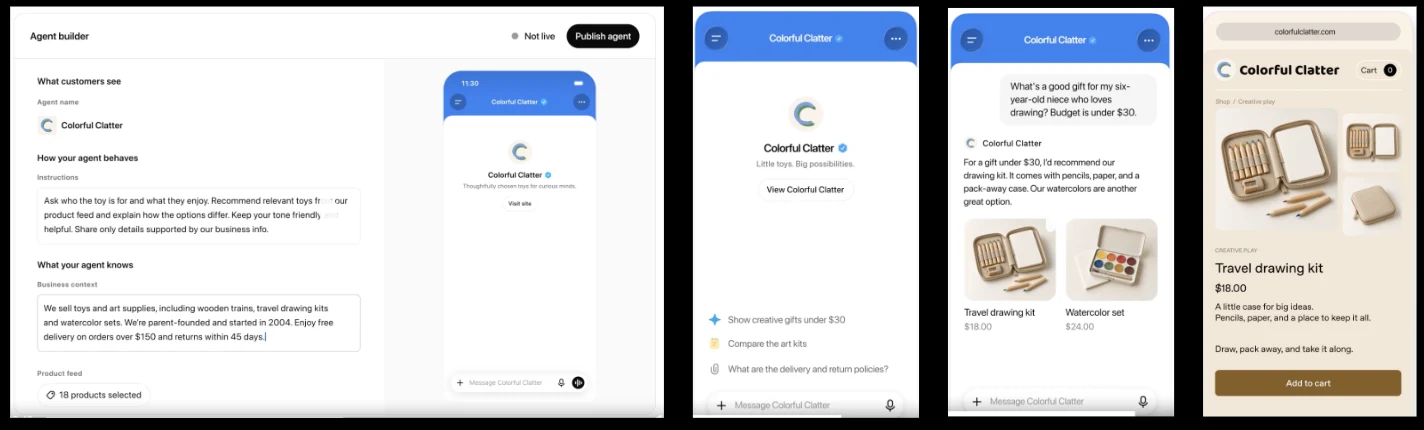
Three days earlier OpenAI announced Business Hub, where businesses claim a profile, submit product feeds and, where eligible, deploy their own Business Agents. Shopify merchants can connect from Shopify admin. Taken together, OpenAI is building both sides of the marketplace, the shopper’s GPT agent and the business’s presence, inside an app it says reaches 1.2 billion people a week.
The Commerce Partner Playbook lays out the route. Product feeds inform search, comparison happens in the convo, then checkout runs in one of two ways:
1) thru a cloud browser on the merchant’s existing site
2) thru a plugin, a connector that lets the agentA ask the merchant’s own system for things like stock or an order quote, with the merchant’s system checking each request.
Ones wallet enters at the payment step, and the Accept payments guide says no Wallet specific integration is required.
So interesting - where the boundaries are being drawn btw intent, credential, agent, merchant and issuer. The merchant never gets the card number, only a stand-in token. OpenAI’s guide says that token covers one purchase and should not be reused for another. Merchants also get a Payment Account Reference, which lets them match the token to the account behind it. For teams deploying checkout code, the practical question is how to keep these apart: one-time Wallet tokens, cards already on file, and recurring charges with consent. Each has its own rules, and the Wallet token is not meant to be saved or reused. The layer between an agent’s intent and a merchant’s processor is seems to be turning into its own piece of infra.
Shopify and Google are working on a different layer, the Universal Commerce Protocol. UCP aims to be a shared language that lets agents and merchants find each other and agree on how to pay, without tying them to one processor or wallet. ChatGPT is one place where shopping happens, and Wallet is one way to pay there. UCP is how an agent anywhere could talk to a merchant and agree on how to pay. The two can sit side by side.
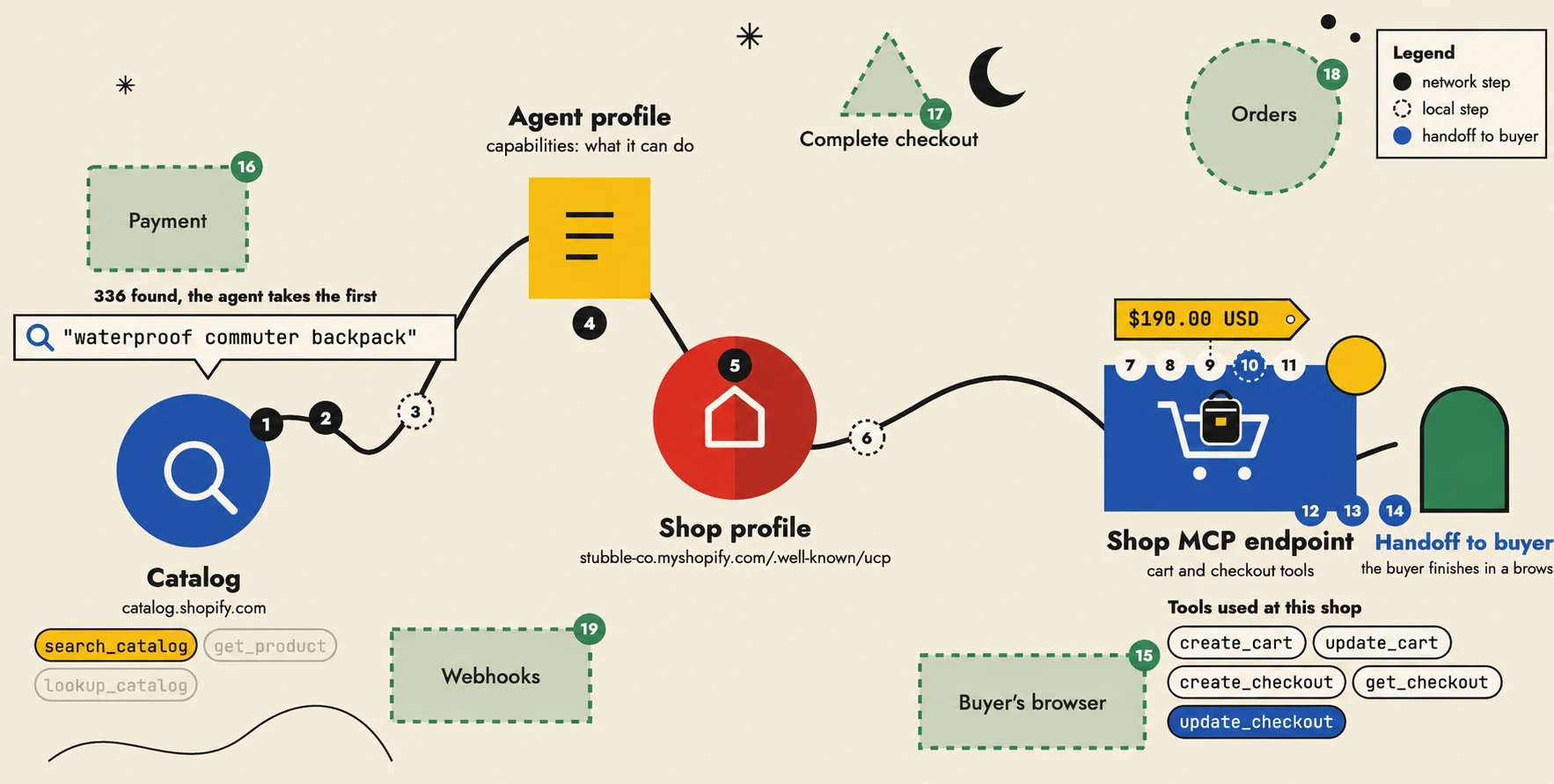
Author’s illustration of a UCP shopping flow, based on ucp.dev
Some parts of the stack are still to be defined. OpenAI says Wallet keeps a record of what the person approved, and eligible purchases keep dispute protections. What a bank will do with that record in a dispute is not yet clear. “My agent bought the wrong thing” could mean the wrong item, a misdescribed item, or ignored instructions. Each is a different kind of dispute.
Approving every purchase with a biometric adds security and some friction. OpenAI expects to add preapproved purchases within limits over time.
Merchants have another problem. Fraud systems built to catch bots can also block ChatGPT’s browser, so OpenAI has started passing along details like location and time zone. Each merchant’s fraud team has to decide how much to trust them.
The first step for merchants is mundane: check whether a CDN or firewall rule is blocking verified ChatGPT browser visits, then decide on purpose. A valid token does little if the agent never reaches the payment form.
A few numbers will tell the story, especially for those of us AI-pilled enough to test this stuff the day it ships: how many people turn Wallet on, how many purchases finish, how many people come back, and how often purchases are disputed. In 2025 ChatGPT launched Instant Checkout, with Etsy and Shopify merchants among the first, so people could buy inside the chat. By March 2026, reports said OpenAI had scaled it back and left checkout to merchants. Wallet asks for less. It borrows the card and leaves the checkout to the merchant, which may be the version that sticks.
Sources
-
Visa Research Finds Consumer Trust is Accelerating Path to Agentic Commerce - September 2026
-
OpenAI shifts checkout plans in its agentic commerce strategy - March 2026
bsky.app/profile/schwentker.sandboxlabs.ai/post/3n2ez5wh5v22o