
Field notes from MongoDB.local Build Fest on what has to hold before an agent can act.
Money never moved. An agent found that a specialty coffee roaster was running low on valve bags, examined inventory, checked suppliers, looked for open orders, recommended one vendor, then found a faster one when the shop owner pushed back, and placed a purchase order. Except the purchase order was a document inserted into a MongoDB collection. No funds left an account, no counterparty received settlement, no receipt crossed an organizational boundary. That is not a criticism of the demo. It is what made the demo useful.
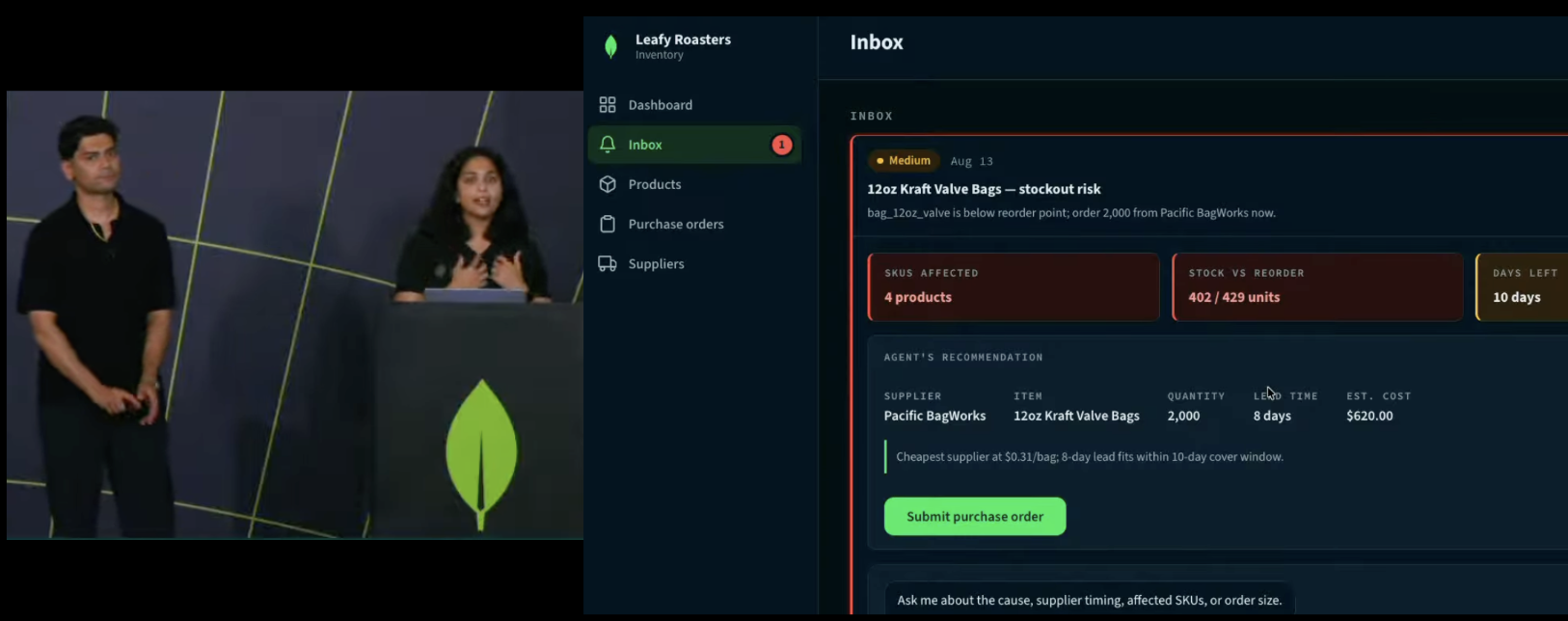
Gaurab Aryal & Apoorva Joshi: “Building Agents That Work for You with MongoDB MCP”
On Aug. 13 at Pier 48 in San Francisco, MongoDB.local Build Fest framed a day around moving agents from prototype to production, and commerce kept appearing before payment did. Almost every difficult system question arrived upstream of money: which identity the agent carried, what it could read, what it could write, where approval lived, what state persisted & whether the information guiding its action was worth trusting. Anyone who has wired an agent to a payment endpoint arrives at a demo like this with one narrow question, which is what stops the write. MongoDB spent the afternoon offering several answers, and the more interesting finding was that each answer lived in a different layer.
Two Planes, One Connection
MongoDB used Build Fest to announce general availability of its Atlas Managed MCP Server, a hosted bridge between Atlas and AI clients such as ChatGPT, Claude Code, Codex, Cursor & Devin. The local MCP server already let an agent query collections, inspect schemas, manage indexes and operate parts of Atlas; the managed version removes the local process and moves that connection into Atlas itself. One server now presents two consequential surfaces, a data plane containing operational records and an Atlas control plane capable of changing infrastructure, users and access. That second surface matters, because “talk to the database” sounds like retrieval while the actual capability surface includes action.
Senior Product Manager Gaurab Aryal described the new access model in four parts: nothing to host, user-delegated authorization, service accounts for autonomous agents, and auditability.
“Actions are attributed to a specific user or an agent.”
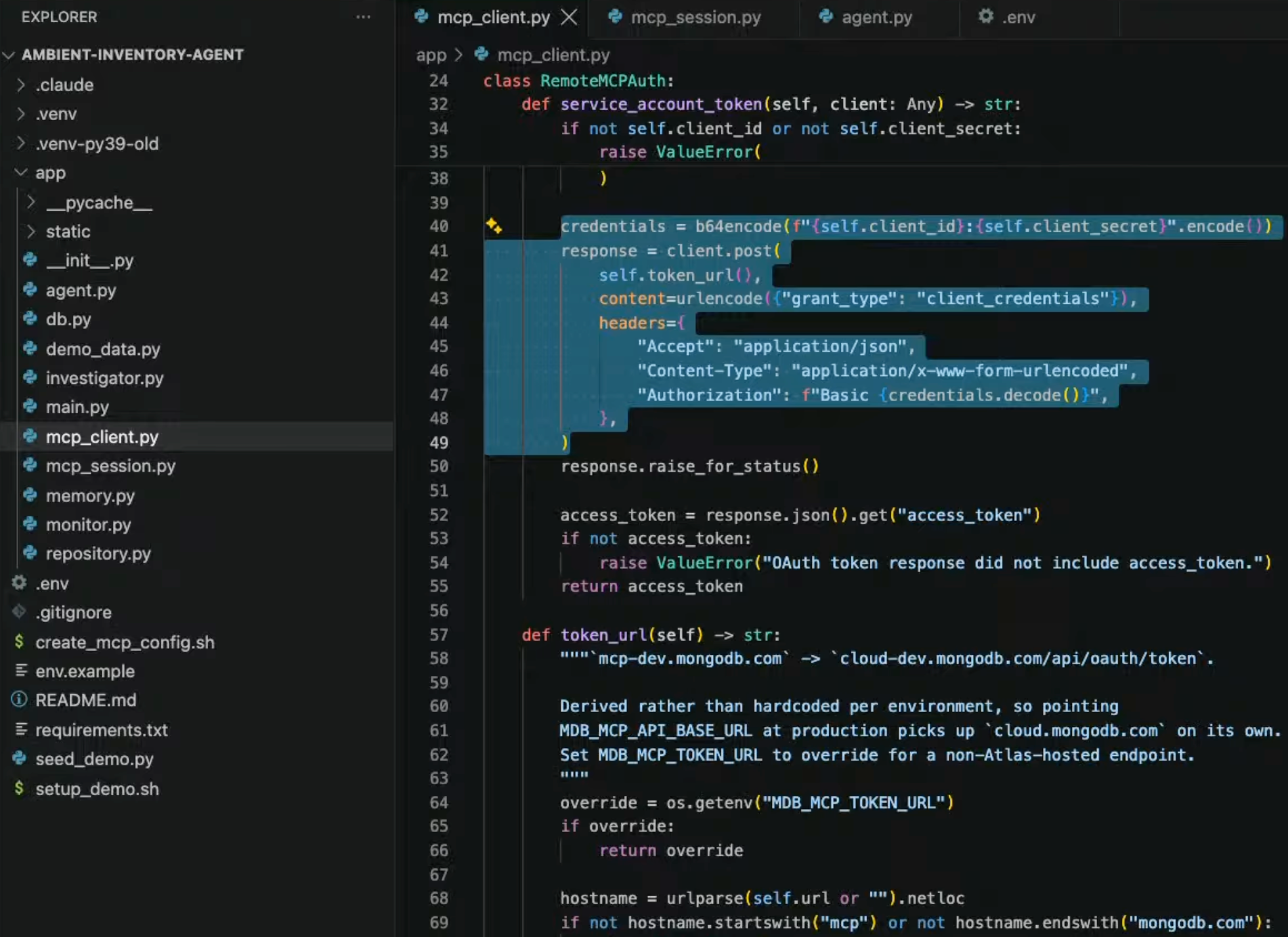
Underneath that sit two distinct access patterns. In interactive use, an AI client acts on behalf of an Atlas user through OAuth. In programmatic use, an autonomous workflow acts through an administrator-provisioned MCP configuration with dedicated service accounts. MongoDB’s access-model documentation makes the distinction explicit, individual identity for interactive work and configured machine identity for automated work, and the separation is not cosmetic. It changes whose authority the agent inherits, how permissions are scoped & what an audit event can attribute later.
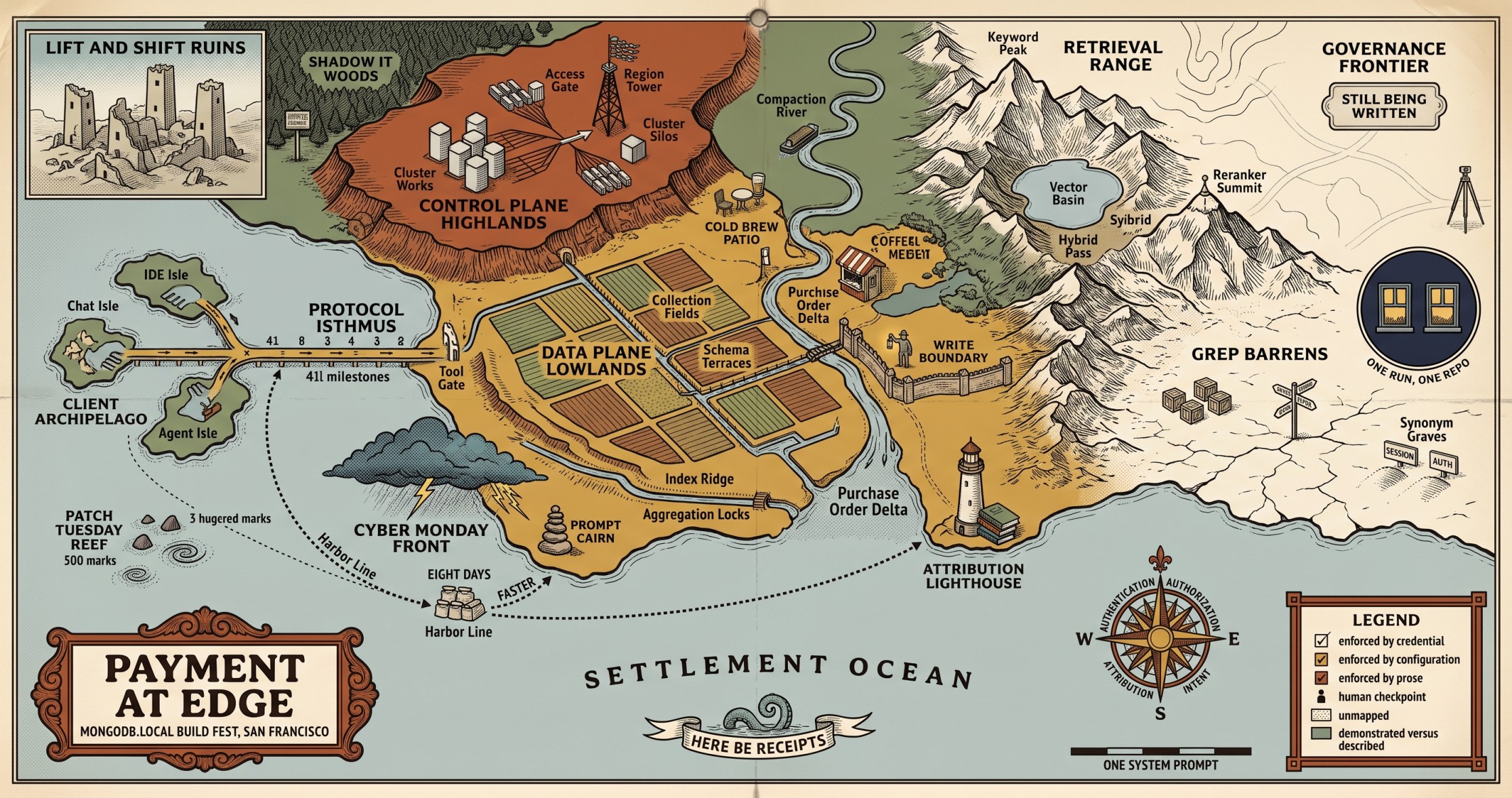
Payment at Edge - author’s mapping
Where Approval Actually Lived
Developer Advocate Apoorva Joshi connected an incident-triage agent to a production cluster, then exposed the boundary in plain language:
“I’ve configured the agent to ask before performing any write actions.”
Read actions were allowed by default and writes required a pause, which Aryal characterized as an “additional human-in-the-loop layer on top of Atlas permissions.” That last phrase carries most of the architecture.
Atlas permissions determine what an identity is allowed to do. The MCP server describes tools, including whether they appear read-only or destructive, and some operations can trigger an MCP elicitation asking the user to confirm before execution, though the AI client still has to support that capability and render the request. MongoDB’s own security documentation is unusually direct here: tool annotations are advisory rather than a security boundary, confirmation can depend on client support, and permissions remain the final enforcement layer. So the reassuring pause on stage was real, but it was produced by coordination across Atlas, the MCP server and the client, and changing the client or the access configuration may change the choreography with it.
The inventory demo placed a second human inside the application itself. As the shop owner reviewed the supplier recommendation, Aryal put the stakes plainly:
“Financial transactions are exactly where you’d want one.”
What followed was a purchase-order record rather than a payment, which made the pause no less valuable, because it located the point where application approval would eventually have to connect to economic authorization. For financial action that distinction is not academic. Permission answers whether an agent may write and confirmation asks whether a human agrees with this write, but neither alone proves what the human intended, which inputs were approved or whether an external effect later matched that approval.
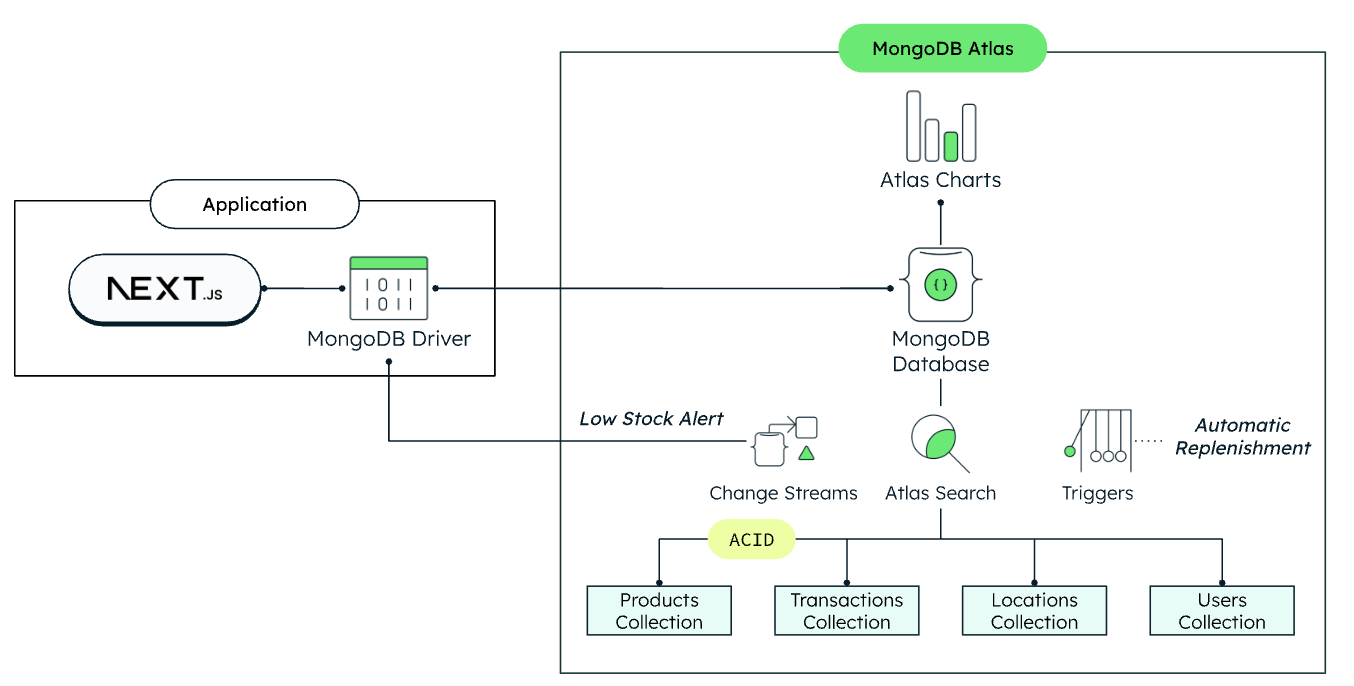
MongoDB Atlas Event-Driven Retail Inventory Management System
Attribution Is Not Intent
Several trust objects kept sliding close enough to look interchangeable, and they are worth separating. Authentication identifies the principal, authorization determines what that principal may do, and attribution records which user, client or service account caused an auditable event. Approval captures a decision to permit a particular action, intent binding connects that approval to the action’s material inputs, and a receipt records what another system actually accepted or executed.
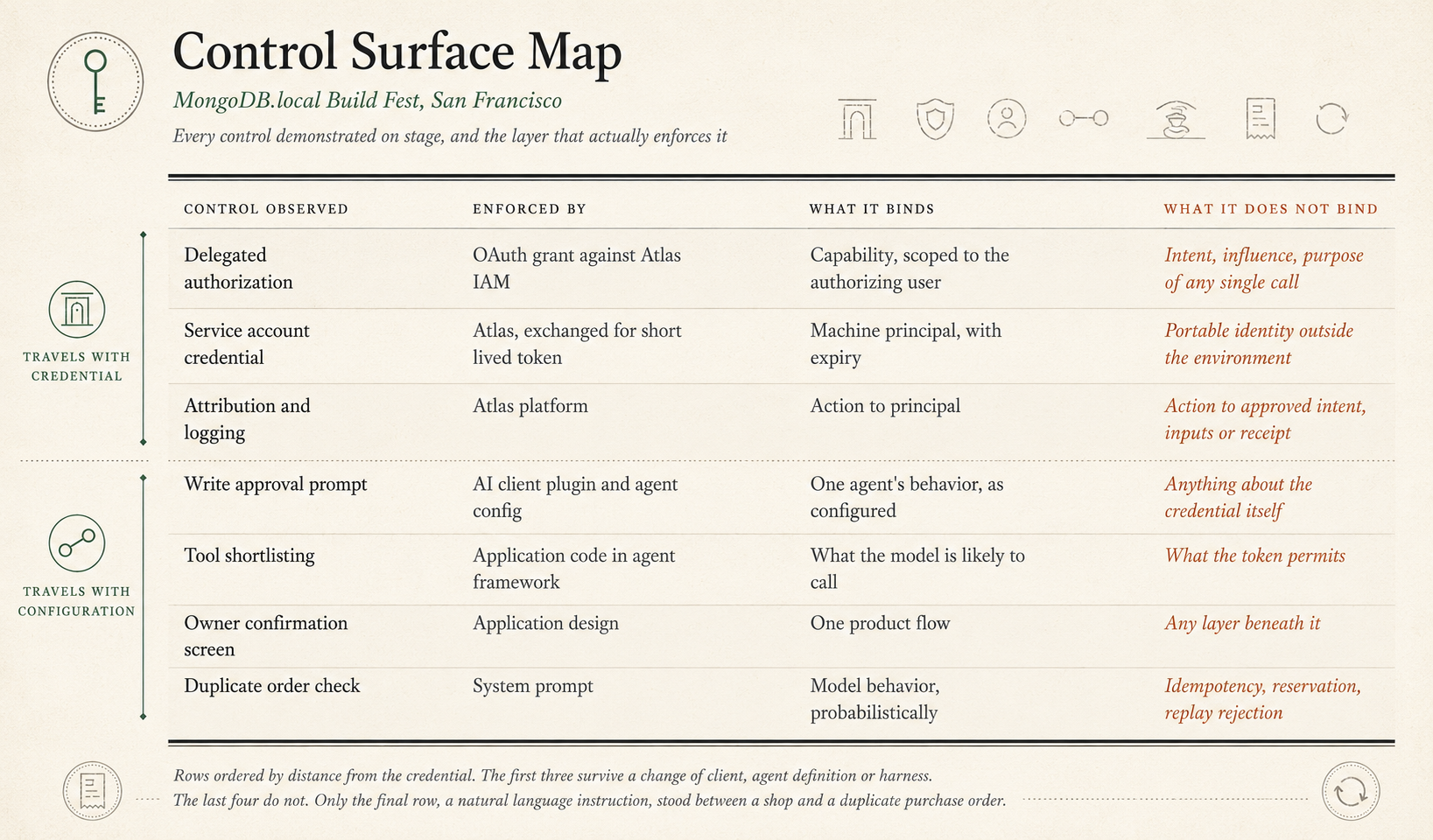
MongoDB made meaningful progress on the first three. Atlas App Connections gives supported AI clients user-delegated access while keeping long-lived credentials away from the client, programmatic MCP configurations give autonomous agents dedicated roles and a preselected read-only posture, and audit events can associate an action with a user and client, or with a service account. But attribution is not authorization, and authorization is not approved intent. A log can show which principal reached a write without necessarily showing why that exact supplier, amount or instruction was accepted.
This became visible in the inventory demo, where the agent checked the purchase-orders collection for open orders because its system prompt told it not to place repeats. In the demonstration, the nearest thing to duplicate-order control lived in prose. That is a perfectly reasonable prototype pattern, and it is not yet an idempotency key, a uniqueness constraint, a reservation or a reconciliation process. In agentic payments, that difference separates a retry from a second transfer.
Fewer Tools, Larger Meaning
The inventory agent could see roughly 41 MCP tools, including cluster management and performance tools, and Joshi filtered that list before passing it to the model, limiting it to data-management and discovery tools. The stated reasons were context-window use and latency, though a smaller tool surface also creates a useful side effect in fewer available actions for the model to consider.
Tool minimization and least privilege are not identical, however. Removing a tool from model context changes what the model can select, while permission scope changes what the underlying identity can execute. Good production systems need both, and need operators to know which one failed when something goes wrong. This is the quiet educational value of managed MCP: it makes several layers that prototypes routinely blur visible enough to teach, namely identity, permission, tool exposure, confirmation and application policy.
Memory Makes Action Cheaper
After the inventory sweep, the shop owner asked whether a faster supplier was available, and the agent answered without making another MCP call, because the earlier results had been persisted through MongoDB’s short-term memory integration with LangGraph. That reduced latency and tool use, and it also changed the risk surface. Persisted context makes the next action cheaper because the agent does not need to reconstruct the world, and it can make that action stale because the agent is reasoning from a snapshot. A supplier’s lead time, inventory position or fraud status might have changed between the sweep and the decision.

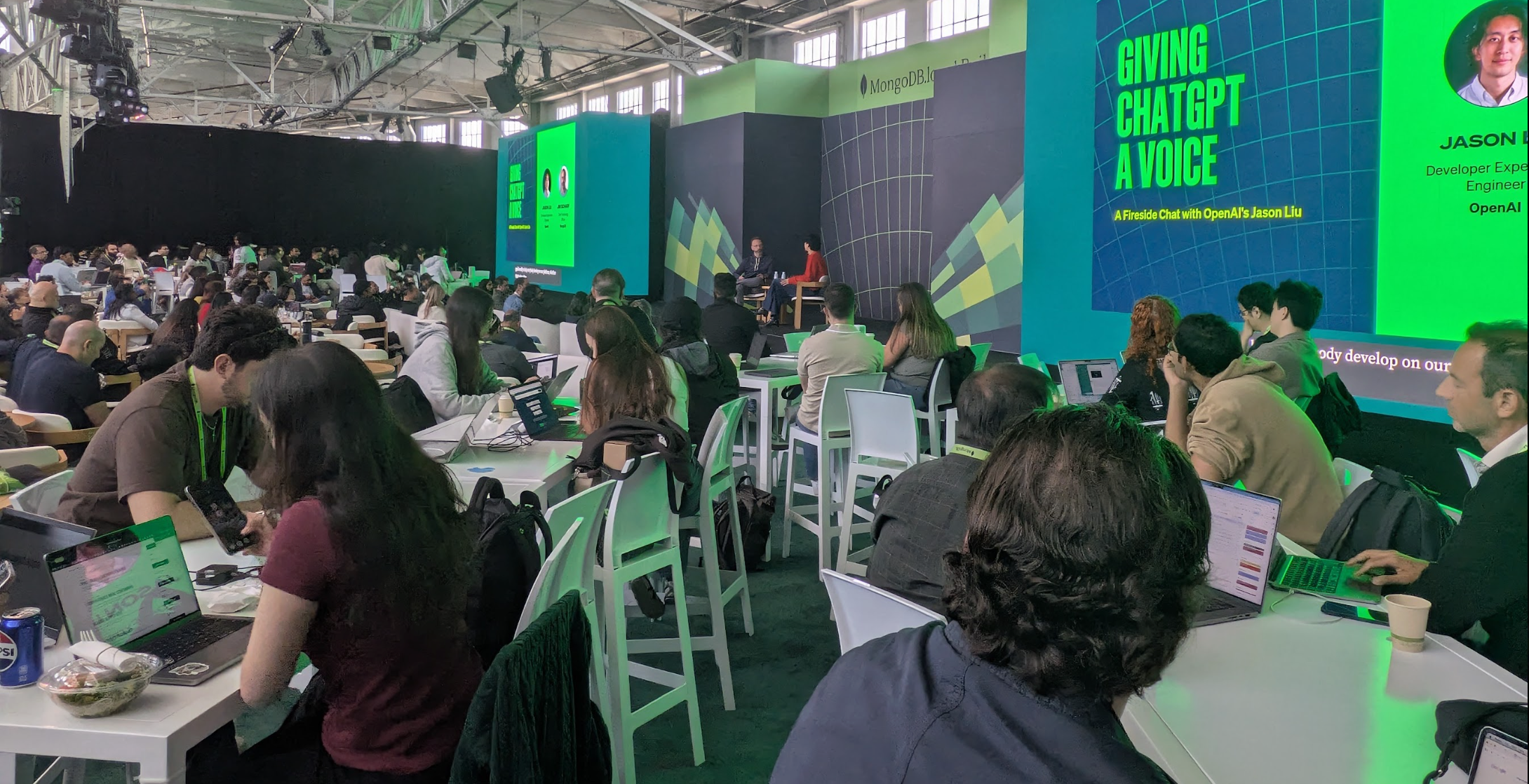
MongoDB CTO Jim Scharf with OpenAI Developer Experience Engineer Jason Liu
Jason Liu of OpenAI had already extended that timeline well past anything a demo can show. Speaking with Scharf,
he mentioned an agent of his own that had been running for 45 days
and explained that he no longer thinks about it because compaction and the built-in memory system handle state for him, so he does not worry about whether the agent knows where it saved a file or when to save one. It just works, in his phrasing, and that is the point at which the staleness question stops being hypothetical rather than the point at which it gets settled. An agent reasoning continuously for six weeks is an agent whose picture of the world has had six weeks to drift, and the machinery that makes the drift invisible is the same machinery that makes the agent pleasant to use.
Liu then widened the production question beyond memory. Demos tend to reach for the smartest available model, while real systems eventually encounter cost and latency, where, he said,
“you have to think about using a portfolio of models.”
That portfolio only becomes governable when its decisions can be evaluated, and production traces, test cases and outcome criteria create the flywheel for deciding when a smaller model is sufficient, when a stronger one is justified & what failure costs more than inference. In financial services, model routing is not merely an efficiency technique, because different actions carry different consequences. Looking up a merchant category, screening a counterparty and releasing funds should not inherit the same model, context or approval policy by accident.
Retrieval Becomes a Control Input
The day’s second infrastructure arc came from Voyage AI, with MongoDB announcing Automated Embedding in Atlas, an Embedding and Reranking API, new retrieval capabilities for data in motion & voyage-code-4, a model optimized for agentic code retrieval. Voyage AI Research Manager Frank Liu positioned the model around repeated work rather than a single lookup:
“it’s optimized specifically for coding agents, allowing you to do more, allowing you to do it faster, and allowing you to do it at a lower cost.”
That cost argument changes once an agent searches autonomously. A person might make a few lookups before choosing a file, while an agent loops across exploration, retrieval, editing, testing and iteration. Staff Developer Advocate 👩🏻💻 Mikiko B. Bazeley named the multiplier:
“an agent working autonomously will repeat that dozens or hundreds of times per task.”
Her point concerned coding agents and the benchmark should stay in that domain, but the structural pattern travels further, because small retrieval mistakes compound when a machine repeats them at agent speed.
For AI financial services, retrieval is therefore part of the control system. An agent may possess legitimate identity and valid write permission yet act from stale, incomplete or wrongly ranked context, and the permission can be correct while the decision is wrong. MongoDB’s integration of operational data, state and retrieval reduces synchronization machinery without removing the need to evaluate what the agent retrieved, when it was current & whether the resulting action deserves a different approval path.

Developer Advocate - Mikiko Bazeley & Voyage AI Research Manager - Frank Liu
Governance as Acceleration
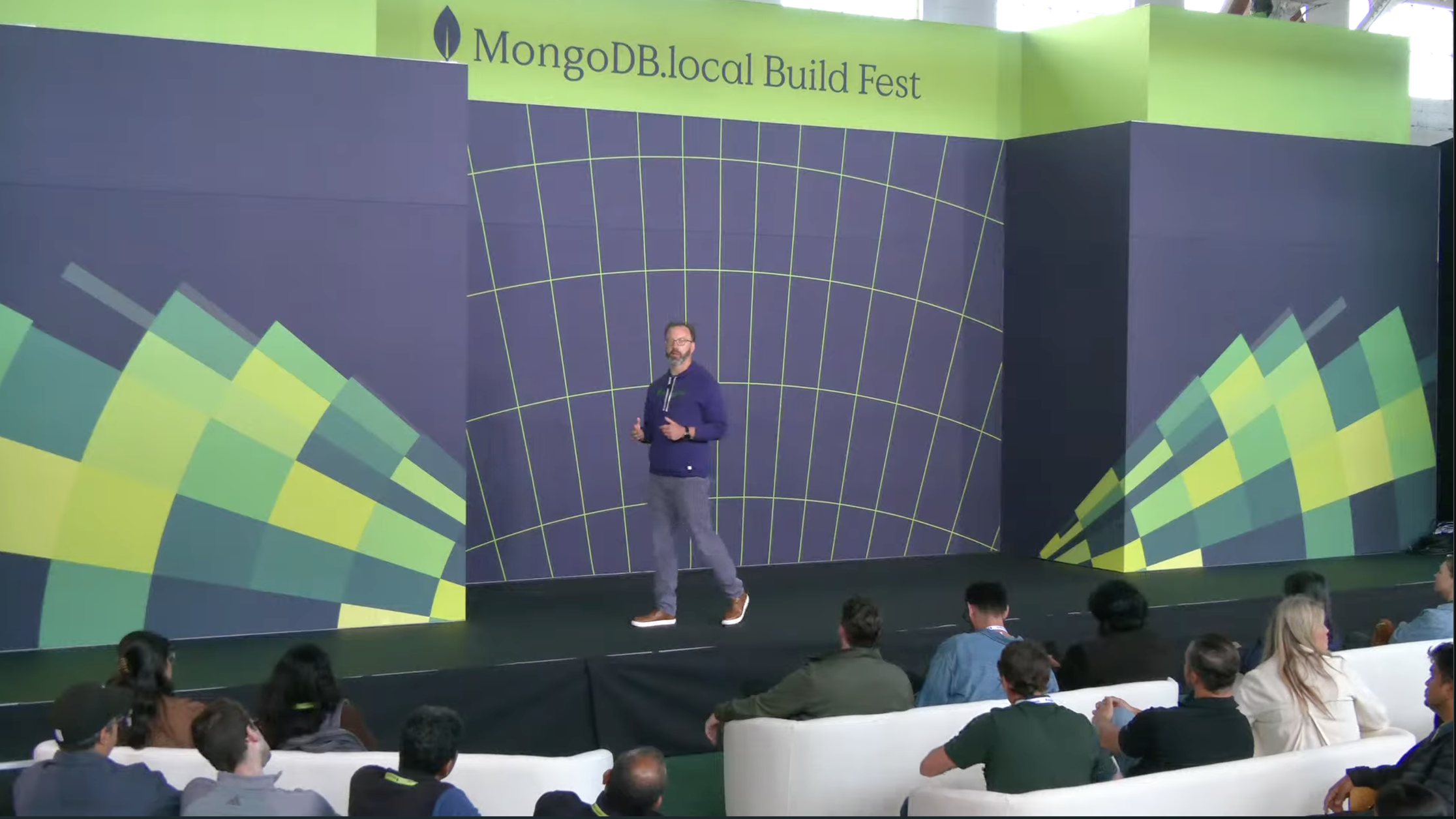
MongoDB CTO Jim Scharf opened with a historical parallel from cloud computing, where early enterprise resistance centered on security and adoption accelerated only after identity, access control, encryption, observability and audit systems matured enough for organizations to move with confidence. He was careful to say that AI governance has not reached that point, that this is the part of the story the industry, including MongoDB, is still writing, before delivering the sharper inversion:
“the companies that figure out governance early won’t be the cautious ones. They’ll be the ones unleashed to move the fastest.”
That is the right frame for agentic payments. Governance is not a compliance layer added after an agent works. It is the architecture that lets consequential action become repeatable.
MongoDB should not be expected to solve payment authorization, settlement or cross-organization trust, and what Build Fest clarified was the handoff. Atlas can govern how an agent reaches operational data and systems of record, MCP can standardize the tool interface, App Connections and service accounts can scope access and improve attribution, and memory and retrieval can make repeated action faster and more informed. The next boundary begins when a record must become an economic action another organization can trust, and at that boundary identity has to travel with approved intent, inputs have to remain bound to the decision, retries have to remain distinguishable from duplicates, and revocation, partial failure, settlement and receipt all have to survive outside one organization’s control plane.
MongoDB showed how an agent can reach the system of record with scoped authority, how a human can remain near the write & how retrieval and state shape what happens next. Money never moved. That is why everything before it mattered.
MongoDB CTO Jim Scharf
Appendix: Control Surface Map
Sources
mongodb.com/events/mongodb-local/build-fest
mongodb.com/products/tools/mcp-server
github.com/mongodb-js/mongodb-mcp-server
mongodb.com/docs/mcp-server/remote-mcp/access-models
mongodb.com/docs/atlas/app-connections
mongodb.com/docs/atlas/architecture/current/solutions-library/retail-asset-event-driven-inventory
Mongodb.local Build Fest 2026
Bluesky & Twitter
bsky.app/profile/schwentker.sandboxlabs.ai/post/3mt3avlnffs2i